
What is Dyngus Day?
here's a pussy willow primer

So, how do you explain to
someone that has never expe-
rienced a true Buffalo Dyngus
Day, or felt the saturated sting
of a wet furry twig, that every
year, on the day after Easter,
people of all ages and from ev-
ery walk of life actually chase
one another while brandishing
pussy willow branches, trying
to swat each other to show
their affection, then recipro-
cating that pursuit by dousing
the other person with water?
While keeping a straight face
that is.
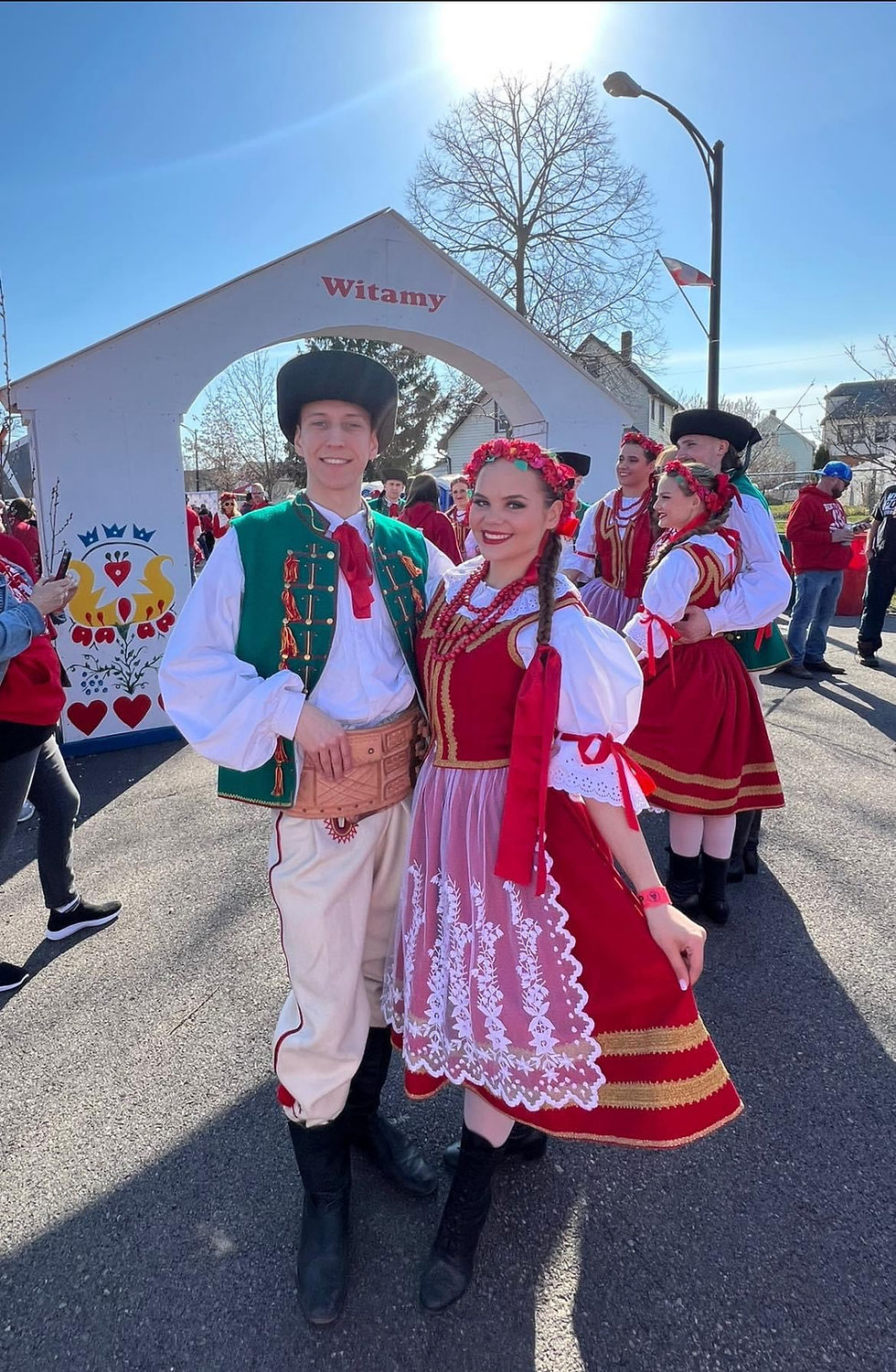
Well, it’s really quite simple.
Just picture Fat Tuesday on the
other end of Lent. It’s basically
just a party signifying the end of
Lent on the day after Easter, as
opposed to the day before lent
starts on Ash Wednesday. The
ancient roots of the post Lent-
en celebration known as Dyn-
gus Day had their start in pagan
sun worship rituals signifying
the beginning of the growing
season but over the centuries,
those rituals have evolved into
a whole different experience.
Especially in Buffalo, NY.
Historically a Polish-Amer-
ican tradition, Smigus-Dingus
or as we call it, Dyngus Day,
celebrates the end of the often
restrictive observance of Lent
and the joy of Easter. Over the
decades, here in Western New
York, Dyngus Day has become
a wonderful holiday to cele-
brate Polish-American culture,
heritage and traditions.

There are many stories that
attempt to explain the origins
of the day. As mentioned, many
Polish religious customs date
back to pre-Christian, Slavic
practices. The custom of pour-
ing water is an ancient spring
rite of cleansing, purification,
and fertility. Since 966 A.D.,
Dyngus Day has been associat-
ed with the baptism of Prince
Mieszko I. Tradition states that
Prince Mieszko I along with his
court were baptized on Eas-
ter Monday when he adopted
Christianity as the national re-
ligion of Poland. Thus, Dyngus
Day and its rites of sprinkling
with water have become a folk
celebration, in thanksgiving for
the fact that the first king of Po-
land was baptized into Christi-
anity, bringing Catholicism to
Poland. In more modern times,
the tradition continued when
farm boys in Poland wanted
to attract notice from the girls
of their choice.

It was custom-
ary to throw water and hit the
girls on their legs with twigs
or pussy willow branches, co-
logne was used instead of wa-
ter by the more gallant lads.
The ladies would reciprocate
by throwing dishes & crockery
and Tuesday was their day of
revenge, imitating the same
tactics. These days of course
they would most likely be ar-
rested for such frivolity.

Where is Dyngus Day Celebrated?
Buffalo, NY is officially
the Dyngus Day capital of the
World, hosting the largest con-
centration of festival locations,
folk dancers, polka bands and
Polish traditions in the nation.
Although the custom of such a
quirky post Lenten celebration
is based in Polish tradition,
this city, situated on the south
eastern shores of Lake Erie,
has not only embraced this an-
cient custom we have made it
our own. Some smaller events
have been exported from Buf-
falo into other communities
where Polish-Americans have
settled however there is no
dispute that if you truly want
to Dyngus properly there is no
other place than Buffalo to do
so. Ironically, it’s not widely
observed in Poland. But we’re
working on it.
Pussy Willows or Water?
This is a yearly debate
among Dyngus Day revelers.
The tradition holds that on
Easter Monday boys would
sprinkle the girls with water
and tap them with pussy wil-
lows. On Easter Tuesday, the
women would return the favor.
However at modern Dyngus
Day parties it is common prac-
tice that both men and wom-
en trade water splashing and
pussy willow spanking equally.

Why use pussy willows?
Pussy willows play a ma-
jor part in Buffalo’s Dyngus
Day celebrations as men and
women flirt with playful “taps.”
Branches of the plant are used,
as the pussy willow is one of
the first “budding” plants of
spring. This like the use of wa-
ter is directly related to the
emerging “life” associated
with a new growing season.


Comments